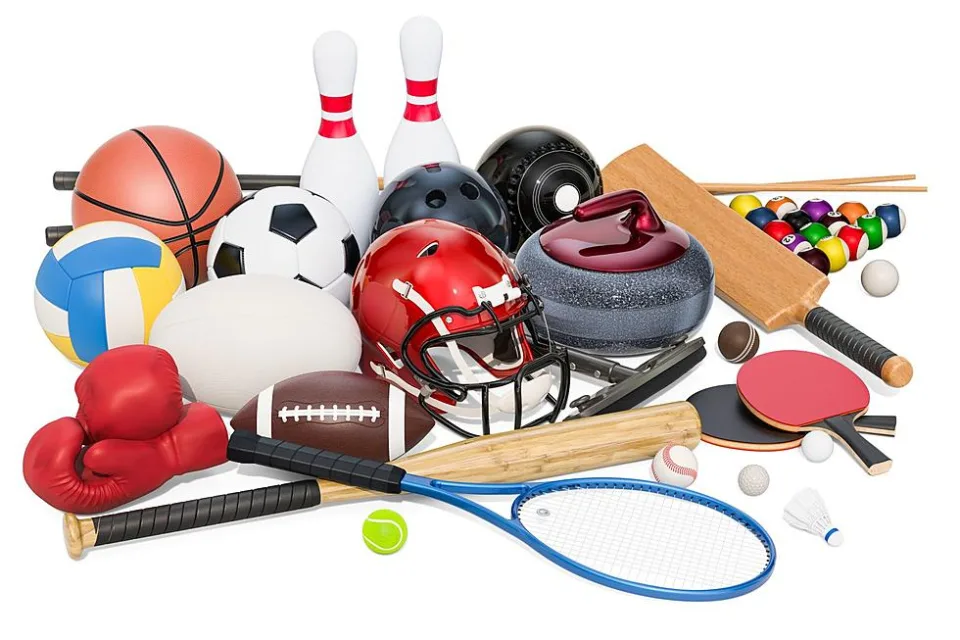
Choosing the Right Sports Gear: A Comprehensive Comparison Guide
The world of sports offers a vast array of activities, from high-intensity team games to serene individual pursuits. Regardless of your chosen discipline, the right equipment can significantly enhance your performance, comfort, and overall enjoyment. However, navigating the sheer volume of sports gear available can be overwhelming. This guide aims to demystify the selection process by comparing popular product categories within the sports niche, providing you with the knowledge to make informed purchasing decisions.
Running Shoes: Cushioning vs. Stability
For runners, the choice of footwear is paramount. Two primary categories dominate the market: cushioned shoes and stability shoes. Understanding their distinct features and benefits will help you select the pair best suited to your gait and running style.
Cushioned Running Shoes
Cushioned running shoes are designed to provide maximum shock absorption. They typically feature thick, soft midsoles made from materials like EVA foam or proprietary blends. These shoes are ideal for runners who:
- Have a neutral pronation (their foot rolls inward slightly to absorb shock naturally).
- Prioritize comfort and a plush feel.
- Run on hard surfaces like asphalt or concrete.
- Are looking to reduce impact on their joints.
- Often participate in long-distance running.
The primary advantage of cushioned shoes is their ability to mitigate the repetitive impact of running, potentially reducing the risk of injuries related to stress and fatigue. However, they might offer less support for runners who overpronate.
Stability Running Shoes
Stability running shoes are engineered to control mild to moderate overpronation. Overpronation occurs when the foot rolls inward excessively after landing, which can lead to strain on the ankles, knees, and hips. These shoes incorporate features like:
- Medial posts (denser foam on the inner side of the midsole) to resist inward rolling.
- Guide rails or other structural elements to keep the foot aligned.
- Firmer midsoles for enhanced support.
Stability shoes are recommended for runners who:
- Exhibit mild to moderate overpronation.
- Seek to improve their running form and efficiency.
- Are prone to injuries associated with poor foot alignment.
- Want a more responsive feel with added support.
While stability shoes offer crucial support, they might feel less flexible or comfortable for runners with a neutral gait.
Comparison Table: Cushioning vs. Stability Shoes
| Feature | Cushioned Running Shoes | Stability Running Shoes |
|---|---|---|
| Primary Benefit | Shock absorption, comfort | Overpronation control, support |
| Midsole Construction | Soft, thick foam | Firmer, with medial posts or guide rails |
| Ideal for Pronation | Neutral | Mild to moderate overpronation |
| Target Runner | Comfort seekers, long-distance runners, neutral runners | Runners needing alignment correction, injury prevention focus |
| Feel | Plush, soft | Supportive, slightly firmer |
Cycling Helmets: Road vs. Mountain Bike
Cycling helmets are non-negotiable safety equipment. While their core function remains the same – protecting your head – road and mountain bike helmets are designed with different riding environments and demands in mind.
Road Cycling Helmets
Road cycling helmets are optimized for speed and aerodynamics. They typically feature:
- A streamlined, aerodynamic profile to reduce wind resistance.
- Fewer, but larger, vents to promote airflow at higher speeds.
- A lightweight construction for comfort on long rides.
- Often include features like integrated visors or the ability to attach them.
These helmets are best suited for cyclists who primarily ride on paved roads, participate in road races, or prioritize speed and efficiency.
Mountain Bike Helmets
Mountain bike helmets are built for durability and offer more comprehensive protection for off-road adventures. Key characteristics include:
- A deeper rear coverage for enhanced protection against impacts from falls.
- A prominent visor to shield the rider's eyes from sun, mud, and debris.
- More ventilation ports, often smaller and more numerous, to keep riders cool during strenuous climbs.
- Robust construction to withstand impacts from branches and rough terrain.
- Some models incorporate MIPS (Multi-directional Impact Protection System) for rotational impact protection.
Mountain bike helmets are the preferred choice for trail riding, downhill biking, and any activity involving off-road terrain where falls and impacts are more likely.
Comparison Table: Road vs. Mountain Bike Helmets
| Feature | Road Cycling Helmets | Mountain Bike Helmets |
|---|---|---|
| Primary Focus | Aerodynamics, speed, ventilation | Protection, durability, coverage, debris protection |
| Shape/Profile | Streamlined, low-profile | Deeper, more coverage, often with a visor |
| Ventilation | Fewer, larger vents | More, often smaller vents |
| Visor | Optional or integrated | Standard, prominent |
| Weight | Generally lighter | Can be slightly heavier due to construction |
| Ideal For | Road racing, commuting on paved roads, speed-focused riding | Trail riding, downhill, cross-country, off-road adventures |
Yoga Mats: Standard vs. Eco-Friendly
For yoga practitioners, the mat is their sanctuary – a surface that provides grip, cushioning, and stability. The choice between a standard yoga mat and an eco-friendly option often comes down to material, durability, and environmental consciousness.
Standard Yoga Mats
Standard yoga mats are typically made from PVC (polyvinyl chloride). These mats are known for their:
- Excellent grip and durability.
- Good cushioning, providing comfort for joints.
- Affordability and wide availability.
- Ease of cleaning.
However, PVC is a non-biodegradable material, and its production can have environmental implications. For individuals whose primary concerns are performance, longevity, and budget, standard mats are a popular choice.
Eco-Friendly Yoga Mats
Eco-friendly yoga mats are crafted from sustainable and biodegradable materials, offering a greener alternative. Common materials include:
- Natural Rubber: Provides excellent grip and cushioning but may have a distinct smell and is not suitable for those with latex allergies.
- TPE (Thermoplastic Elastomer): A blend of plastic and rubber, TPE is recyclable, biodegradable, and often lighter than rubber. It offers good grip and cushioning.
- Cork: Naturally antimicrobial and offers superior grip, especially when wet. It's biodegradable and renewable.
- Jute: A plant-based fiber that offers a textured grip and is biodegradable.
The benefits of eco-friendly mats include:
- Reduced environmental impact.
- Often made from natural, non-toxic materials.
- Unique textures and properties for enhanced grip and comfort.
While generally more expensive than PVC mats, eco-friendly options appeal to environmentally conscious yogis who prioritize sustainability without compromising on performance.
Comparison Table: Standard vs. Eco-Friendly Yoga Mats
| Feature | Standard Yoga Mats (PVC) | Eco-Friendly Yoga Mats (e.g., Rubber, TPE, Cork) |
|---|---|---|
| Primary Material | PVC (Polyvinyl Chloride) | Natural Rubber, TPE, Cork, Jute, etc. |
| Environmental Impact | Non-biodegradable, production concerns | Biodegradable, sustainable, renewable materials |
| Grip | Generally good | Varies by material; often excellent (especially rubber, cork) |
| Cushioning | Good | Varies by material; generally good |
| Durability | High | Varies by material; can be very durable |
| Allergies | Generally hypoallergenic | Potential for latex allergies with natural rubber |
| Price | More affordable | Generally more expensive |
| Ideal For | Budget-conscious, those prioritizing durability and ease of care | Environmentally conscious individuals, those seeking natural materials and unique grip properties |
Strength Training Equipment: Free Weights vs. Machines
Strength training is a cornerstone of physical fitness, and the equipment used can drastically alter the training experience and outcomes. Free weights and weight machines represent two fundamental approaches to resistance training.
Free Weights
Free weights encompass dumbbells, barbells, kettlebells, and weight plates. They require the user to stabilize the weight throughout the entire range of motion, engaging more secondary and stabilizing muscles.
Advantages of Free Weights:
- Full Body Engagement: They activate a wider range of muscles, including stabilizers, leading to more functional strength.
- Greater Range of Motion: Allow for more natural, multi-planar movements.
- Versatility: Can be used for a vast number of exercises.
- Improved Coordination and Balance: Require more control and proprioception.
- Potentially More Effective for Muscle Growth: Some studies suggest free weights can elicit a greater hypertrophic response.
Disadvantages of Free Weights:
- Higher Risk of Injury: Improper form can lead to significant injury.
- Steeper Learning Curve: Requires proper technique instruction.
- Requires More Space: A rack, bench, and space to move are often needed.
- Spotter May Be Necessary: For heavier lifts, a spotter is recommended for safety.
Weight Machines
Weight machines guide the user through a fixed path of motion, isolating specific muscle groups. Examples include leg press, chest press, lat pulldown, and bicep curl machines.
Advantages of Weight Machines:
- Safety: The fixed path reduces the risk of injury, making them suitable for beginners and those rehabilitating.
- Ease of Use: Simple to operate and understand.
- Muscle Isolation: Excellent for targeting specific muscle groups for focused development.
- No Spotter Required: Generally safe to use alone.
- Space Efficient: Often more compact than a full free weight setup.
Disadvantages of Weight Machines:
- Limited Muscle Engagement: Do not engage stabilizing muscles as effectively as free weights.
- Fixed Range of Motion: May not suit all body types or natural movement patterns.
- Less Functional Strength: The strength gained may not translate as directly to real-world activities.
- Can Be Expensive: Commercial-grade machines are a significant investment.
Comparison Table: Free Weights vs. Weight Machines
| Feature | Free Weights (Dumbbells, Barbells, Kettlebells) | Weight Machines (e.g., Leg Press, Chest Press) |
|---|---|---|
| Primary Muscle Engagement | Prime movers + stabilizers | Primarily prime movers |
| Risk of Injury | Higher (with improper form) | Lower |
| Learning Curve | Steeper | Lower |
| Versatility | Very high | Limited to specific exercises |
| Functional Strength | Higher | Lower |
| Coordination & Balance | Requires significant | Minimal requirement |
| Space Requirement | Higher | Lower |
| Ideal For | Intermediate to advanced lifters, those seeking functional strength, athletes | Beginners, those rehabilitating, individuals focusing on muscle isolation |
Outdoor Recreation Gear: Backpacking vs. Day Hiking
The world of outdoor recreation offers a chance to connect with nature, but the type of adventure dictates the gear you'll need. Backpacking and day hiking, while both involving walking in nature, require fundamentally different equipment approaches.
Backpacking Gear
Backpacking involves multi-day trips where you carry all your essential gear, including shelter, food, and sleeping equipment, on your back. This necessitates lightweight, durable, and multi-functional items.
Key Backpacking Gear:
- Backpack: A large-capacity (50-80+ liters) pack designed for carrying significant weight comfortably, with robust suspension systems.
- Tent: Lightweight, compact, and weather-resistant shelter, often designed for one to four people.
- Sleeping Bag/Quilt: Rated for expected nighttime temperatures, prioritizing warmth-to-weight ratio.
- Sleeping Pad: Provides insulation and cushioning from the ground.
- Camp Stove & Fuel: For cooking meals.
- Water Filter/Purifier: To ensure safe drinking water.
- Food: Lightweight, non-perishable, and calorie-dense.
- Appropriate Clothing Layers: Moisture-wicking base layers, insulating mid-layers, and waterproof/windproof outer shells.
- Navigation Tools: Map, compass, GPS device.
The emphasis for backpacking is on self-sufficiency, weight optimization, and durability to withstand the rigors of extended outdoor living.
Day Hiking Gear
Day hiking involves shorter excursions, typically completed within a single day, where you return to your starting point. The gear is lighter and less extensive.
Key Day Hiking Gear:
- Daypack: A smaller backpack (15-30 liters) for carrying essentials like water, snacks, a first-aid kit, and extra layers.
- Water Bottle/Hydration Reservoir: Sufficient water for the duration of the hike.
- Snacks: Energy bars, fruit, nuts.
- Lightweight Jacket: A windbreaker or light rain jacket.
- Sun Protection: Sunscreen, hat, sunglasses.
- Basic First-Aid Kit: For minor injuries.
- Navigation Tools: A trail map or GPS app on a phone.
- Comfortable Hiking Shoes/Boots: Providing good ankle support and traction.
Day hiking gear focuses on comfort, convenience, and carrying just enough for a day's adventure without the need for overnight accommodations or extensive food preparation.
Comparison Table: Backpacking vs. Day Hiking Gear
| Feature | Backpacking Gear | Day Hiking Gear |
|---|---|---|
| Trip Duration | Multi-day | Single day |
| Primary Backpack Size | Large (50-80+ liters) | Small to medium (15-30 liters) |
| Essential Items Carried | Shelter, sleeping system, cooking gear, multi-day food supply, extensive clothing, safety equipment | Water, snacks, light jacket, sun protection, basic first-aid |
| Weight Focus | Critical; emphasis on lightweight and compact items | Less critical; focus on comfort and convenience |
| Shelter Requirement | Yes (tent, hammock) | No |
| Cooking Equipment | Yes (stove, fuel, cookware) | No |
| Food Supply | Multi-day, non-perishable, calorie-dense | Snacks for the day |
| Ideal For | Extended wilderness exploration, remote adventures | Short excursions, exploring local trails, nature walks |
Conclusion
Selecting the right sports gear is a critical step towards enjoying your chosen activity to its fullest. By understanding the nuances between different product categories and their intended uses, you can make informed decisions that align with your personal needs, skill level, and the specific demands of your sport. Whether you're a runner seeking the perfect stride, a cyclist prioritizing safety, a yogi looking for mindful practice, a strength trainer building muscle, or an outdoor enthusiast exploring the wild, the right gear is your foundation for success and enjoyment.